Reinventing Archival Methods in The Hague

Presentation by Cassie Findlay for ‘Paradigm Shift’, a seminar in honour of Hans Hofman, National Archives of the Netherlands, The Hague, January 27 2014

Be_CyKaIAAAq2fD.jpg thumbThis paper is based on one of the same name prepared and delivered at the Australian Society of Archivists’ conference in 2013  with Kate Cumming, a fellow founder of the Recordkeeping Roundtable.

In 1986 David Bearman first argued that the core methods of the archival profession – appraisal, description, preservation and access – were fundamentally unable to cope with the volumes of information that they were required to process. He called on the profession to completely reinvent its core methods.

While much has been done in the intervening 25 years, as a profession, our archival methods are still today ill-equipped to deal with the volume, fragility and complexity of contemporary archival records, and they are failing us at a time of critical risk. Continue reading

Posted in Post | Tagged , , , | 4 Comments

Reinventing Archival Methods: Issues papers

Background

The ‘Reinventing Archival Methods’ workshop, held in November 2012, came about following discussions in our profession in which we shared concerns that that our professional methods are not coping with the scale and complexity of contemporary recordkeeping challenges, and they are failing us at a time of critical risk.

RAM slideEarly on, we recognised that this is not the first call to reinvent our professional practices. In 1986 David Bearman first argued that our core methods of appraisal, description, preservation and access were fundamentally unable to cope with the volumes of information that archivists were required to process. He called on the profession to completely reinvent its core methods.  While much has been done in the intervening 25 years, as a profession our methods are still ill-equipped to deal with the volume, fragility and complexity of contemporary archival records. So, inspired by Bearman’s ‘Archival Methods’, we decided that  it was time for us, as a profession, to explore how we can fundamentally reassess our methods and determine what can be done to create a stable archival record of the 21st century. You can read a full report on the workshop here.

At the end of Day 2 of the workshop, it was announced that members of the Recordkeeping Roundtable would lead the development of two issues papers drawing on discussion and ideas from the workshop. Volunteers from the workshop participants put up their hands to assist in the drafting of the issues papers, one on access and one on appraisal.

About the issues papers

The papers both seek to encapsulate the key issues identified by speakers and participants at the workshops, and also identify opportunities for further research, for prototypes and projects that could be run either by the Roundtable or other stakeholders such as the Universities, government archives or professional associations. The papers were developed in consultation with the reference groups of volunteers from the workshops. The lead authors on the papers were Barbara Reed (Access) and Kate Cumming and Anne Picot (Appraisal).

Access (PDF, 33KB)

Appraisal (PDF, 29KB)

Members of the Recordkeeping Roundtable will be presenting on the papers at the Australian Society of Archivists’ conference in Canberra in October 2013.

Start the conversation!

The Roundtable is keen to know what you think about the issues raised in the papers, and for a conversation on these important matters to continue within our profession. Comment here on our blog, chat on Twitter using the hashtag #archmethods, post to ArchivesLive or to the Archives and Records Australia Google Group. For those of you attending the Canberra conference, we look forward to discussing the future of these core activities of our profession with you there.

Posted in Uncategorized | Tagged , | Leave a comment

Report from Game On! The challenges of digital games preservation and why it matters

About 30 interested people from a variety of backgrounds met on April 2nd at the University of Sydney to hear Associate Professor Melanie Swalwell from Flinders University speak at The Recordkeeping Roundtable event ‘Game On! The Challenges of digital game preservation and why it matters’.

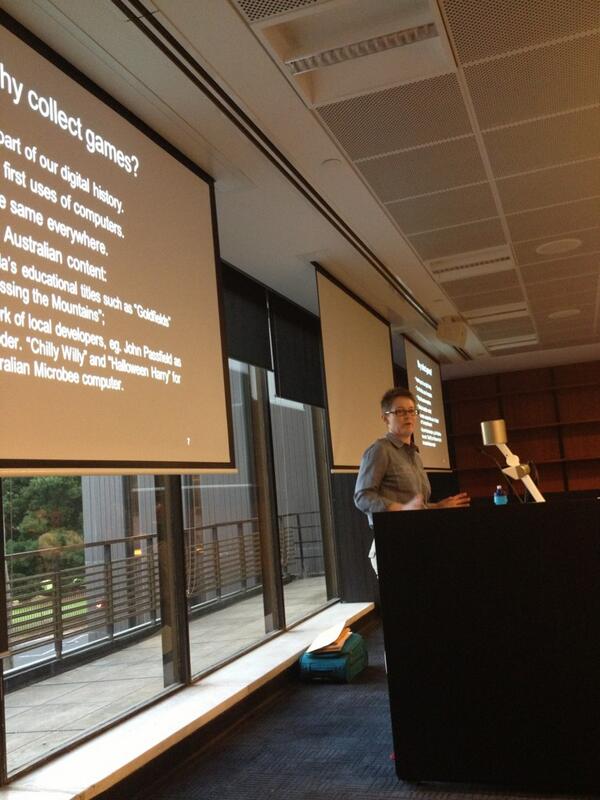
Melanie spoke of the distinct Australasian voice to be heard in early games, noting the game onimportance of early initiatives using games as educational resources, and the importance of the games in how individual computing and programing skills were developed.  Focussed on 1980s microcomputer games, Play it Again, supported by an ARC Linkage Grant, is the project currently driving much of Melanie’s work.  Play it Again is a  game history/preservation project focused on Australian and New Zealand digital games of the 1980s, the project has dual cultural and technical ‘streams’.  It  will be both uncovering the history of local production and consumption of local games, and developing techniques for preserving the complex digital artefacts that games are. Over 700 individual titles have been identified to date.  Melanie also talked about another project, the Australasian Heritage Software Database which is collecting documentation from the public – and, where feasible, source code – in order to create a picture of the software written locally, and presenting this online. Continue reading

Posted in Report | Tagged , , , | Leave a comment

Game On! The challenges of digital games preservation and why it matters

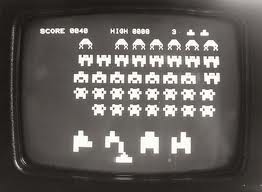
The Recordkeeping Roundtable is pleased to announce its next event: ‘Game ON! The challenges of digital game preservation and why it matters’ with Associate Professor Melanie Swalwell from the Department of Screen and Media at Flinders University.games

When: Tuesday 2nd April , 5.30 for 6.00-7.00pm
Where: Seminar Room, Level 2, Fisher Library, University of Sydney
Cost: $5.00 donation to cover drinks and nibbles
Registration: Go to http://gamespreservation.eventbrite.com.au/

The preservation of born digital materials is a challenge that faces us all.  Games provide a means of exploring any number of specific issues of broader relevance, including:

  • Preserving the object or the experience
  • The challenge of almost in-built obsolescence (the latest is always the best)
  • As exemplars of early innovators in graphic techniques, dealing with ubiquitous connection and massively distributed audiences
  • Engaged user base

The field of digital games preservation is growing internationally.  But what of our local Australasian experience? Melanie Swalwell is at the forefront of exploring these issues in relation to early Australasian games.

Continue reading

Posted in Post | Tagged , , | Leave a comment

Ideas for making submissions to the current Commonwealth Government review of FOI legislation #foirev

The following represents potential areas for a submission to Review of the Freedom of Information Act 1982 (C’wealth) and the Australian Information Commissioner Act 2010 (C’wealth) currently being carried out by Dr Alan Hawke at the request of the Attorney General Nicola Roxon. These were identified during the Recordkeeping Roundtable event ‘FOI under attack’ in Sydney on November 20, by our speakers, Brendan Molloy and Paul Farrell, and the participants. Please feel free to cut and paste and use for your own submission, in portions or in its entirety. Acknowledgement is not required.

Submissions are due by December 7 2012. Details on where to submit them are below. 

Following the release of the terms of reference to the FOI and AIC Acts by the Attorney General, Nicola Roxon, on 29.10.2012, I/we submit the following for consideration:

The basic propositions supported in this submission are:

  • FOI provides a mechanism for individuals to see what information is held about them on government files, and to seek to correct that information if they consider it wrong or misleading.
  • FOI enhances the transparency and accountability of policy making, administrative decision making and government service delivery.
  • a community that is better informed can participate more effectively in the nation’s democratic processes.
  • information gathered by government at public expense is a national resource and should be available more widely to the public

Any changes to the legislation should support the Government’s commitment to open government information, using all available mechanisms, including the important legislative rights embodied in FOI, which should be seen as the mechanism of last resort when the presumption and policy directives on ‘open by default’ and administrative access have failed.

Effectiveness of the FOI system

We are concerned that the emphasis of the current terms of reference appear to be concerned with limiting the application of the FOI act under the assumption that undue costs and administrative burden is being placed on government agencies.

Continue reading

Posted in Post | Tagged , , , | 2 Comments

FOI under attack?

The Recordkeeping Roundtable is holding a panel discussion to talk about the current  review of the Freedom of Information Act 1982 (FOI Act) and the Australian Information Act 2010 (IC Act) which is looking at the ‘extent to which those Acts and related laws continue to provide an effective framework for access to government information.’

Come along to a casual session to talk about the review, raise areas of concern and come up with ideas for submissions. We will post the results of the discussions here after the event.

Speakers:

  • Brendan Molloy is the Secretary of Pirate Party Australia, a software developer and a rum enthusiast. Recent run-ins with the AGD regarding Freedom of Information have further invigorated his interest in this area.
  • Paul Farrell is a freelance journalist who has had work published on PBS Frontline, New Matilda, Crikey, ABC Radio National and ABC Online.  He’s a frequent user of state and federal freedom of information laws, and last year obtained the immigration detention centre contract between Serco and the Department of Immigration and Citizenship which was published on New Matilda.  He also has a background in law. Paul is the author of  the article FOI Review a Blow to Transparency, in New Matilda this week.

Where: Upstairs at The Trinity Hotel, cnr Crown and Devonshire Sts, Surry Hills. The Trinity is a 5-10 minute walk up Devonshire St from Central, or is on the 301 or 303 bus routes from the City. Street parking 1 hr limit only.

When: Tuesday November 20, 6-8pm

Cost: Free

Refreshments: We will have the bar open upstairs and a menu of tasty pub dinners & snacks. The Trinity is not charging us to use the space, so eat / drink up! (it’s nice food, happily)

Twitter: The hashtag for this event will be #foirev

Registration: Not compulsory – you can just rock up, but helps us with room set up. Please go to our event registration page.

Continue reading

Posted in Post | Tagged , , | 3 Comments

Reinventing Archival Methods – Program now available

Reinventing Archival Methods Nov 26 2012(PDF, 295 KB)

There’s only a couple of weeks to go until Reinventing Archival Methods workshop. Many apologies to those who missed out, but we will aim to have reports from the event posted here soon. There will also be live tweeting, using the hashtag #archmethods. One person, we are excited to say, who will be following the conversation on Twitter is David Bearman himself, who sent us a lovely mesage this week.  He wrote:

It’s great to hear that there is still an interest both in the original ideas and in applying similar thinking to issues that have arisen as a consequence if subsequent social and technological changes. I look forward to reading your blog and the tweets from the meeting.
Best wishes for your success,
David

Posted in Post | Tagged , , , | Leave a comment

Without a trace: WikiLeaks as unperson

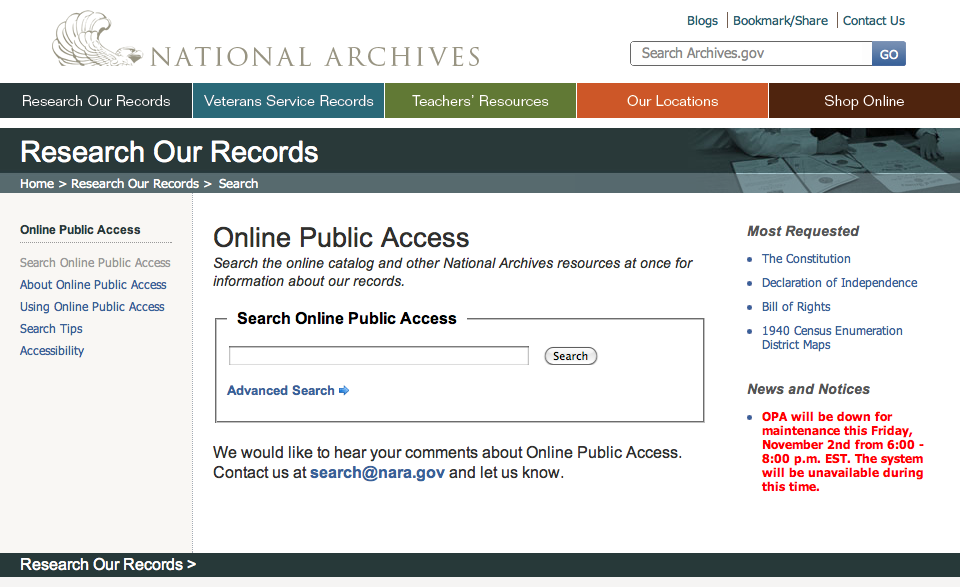
This week the leak site Cryptome.org posted ‘NARA Leaks Wikileaks Citations’, explaining that if you do a collection search at http://research.archives.gov/ – the US National Archives and Records Administration’s primary search tool – using the word ‘WikiLeaks’ the results are blocked. However the filter does not catch cases where ‘Wiki’ and ‘Leaks’ are separated, as occurs in some documents: http://research.archives.gov/search?expression=wiki+leak&pg_src=brief&data-source=archives-gov – so here you can see the kinds of records that are otherwise being censored. Twitter user @AlecMuffett later discovered that wildcards such as “?ikileaks” and “wiki?eaks” retrieve a few more documents with the word “WikiLeaks” in them.
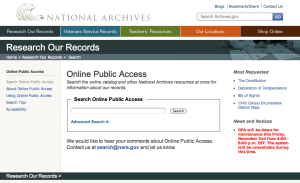
The irony of NARA proudly listing the Bill of Rights as one of their most requested records on the same search page that is blocking access to this public information could not be lost on many. In that it is about denying the people access to evidence because of a threat to power, this news is just another facet of the kind of corruption of the archival trace that I posted about last week in relation to the (anti) recordkeeping directions in the US Military’s detainee policies, in Without a trace: Policies of unaccountability.

We know that the US Government has had a long standing policy that Federal employees not be allowed to access the Wikileaks website, but for the Archives to censor information containing references to a publishing organisation that is politically unpopular via its public access services is a serious business. I have written to a couple of contacts in the US to see if I can find out more.

Update Nov 4: Kevin Gosztola has written a piece on this matter nicely rounding up the various manifestations of the ‘futile panic response’ by the US Government to WikiLeaks, including the Library of Congress’ blocking of their content in its reading rooms, and the State Department’s sacking of Peter Van Buren after he included a link to a Wikileaks document on his personal blog.

Update Nov 6: An archivist friend in the US in an email conversation on this matter with me this week remarked:

To be honest NARA will never lead on these issue and once the “threat to US” flag is raised they (like most) will crumble or just defer to the judgments of the Justice Department, Executive Office of the President or various intelligence agencies.
A parallel instance was the “secret” removal of records that were in the open stacks, discovered by researcher Matthew Aid. Which led to an internal NARA IG report which found that the removals were mostly unnecessary – BUT this only came to light once Aid raised their removal publicly- if left to their own devices NARA “secretly” and with no notice removed “open” documents due to “security” concerns after 9/11.

Update Nov 6 (2): Twitter user @m_cetera reports that the blocking of results in searches using Wikileaks has ceased. If indeed they have consciously removed this ‘banned’ word, then bravo to NARA. If only the rest of the US Govt could show as much sense and lift the banning of access to Wikileaks or Wikileaks related content to Federal personnel.

Update Nov 7: Overnight NARA posted to their blog on this matter: ‘Looking for Wikileaks?’, stating: ‘The banned URL message was an error’, and that the search will now return over two dozen results of the digitised and open access records available on their site. Interestingly, they also take the opportunity to remind us that they would not provide access to actual WikiLeaks documents owing to the fact that they remain classified. This despite the fact that these records have been in the public domain for two years.

This is of course a whole of US Government government directive not to provide access to or even link to the Wikileaks archive, and one that it would be extraordinary for NARA not to follow, however it does show up in sharp relief the difference between the world of default secrecy and political influence that governs public archives and alternatives like WikiLeaks. Particularly since we know following the release in particular of Cablegate how unnecessary many of the secret classifications on these records are.

Posted in Post | Tagged , , , , | Leave a comment

Without a trace: Policies of unaccountability

… A number of what can only be described as ‘policies of unaccountability’ will also be released. One such document is the 2005 document ‘Policy on Assigning Detainee Internment Serial Numbers’. This document is concerned with discreetly ‘disappearing’ detainees into the custody of other U.S. government agencies while keeping their names out of U.S. military central records – by systematically holding off from assigning a prisoner record number (ISN). Even references to this document are classified “SECRET//NOFORN”. Detainees may be disposed of in this manner without leaving a significant paper trail.

Another formal policy of unaccountability is a 2008 Fragmentary Order that minimises the record-keeping surrounding interrogations. Following revelations of torture tapes and pictures from Abu Ghraib and the political scandal over the destruction of Central Intelligence Agency interrogation tapes, the FRAGO eliminates “the requirement to record interrogation sessions at Theatre Internment Facilities”. Although the FRAGO goes on to state that interrogations that take place at Division Internment Facilities and Brigade Internment Facilities must be recorded, it then states that these should be “purged within 30 days”. This policy was subsequently reversed by the new Obama administration. [1]

Repressive regimes are good at recordkeeping. Repression requires administration. Witness Nazi Germany, the Stasi, the Khmer Rouge.

So how to characterise the absence or subversion of recordkeeping seen in the policies of subsequent US Administrations in the detention of ‘terror suspects’ in Guantanamo Bay? Continue reading

Posted in Post | Tagged , , , , , | 2 Comments