Reinventing Archival Methods

A two day workshop, Sydney, 29 – 30 November 2012

Reinventing Archival Methods is a co-presentation by the Australian Society of Archivists and the Recordkeeping Roundtable

Sorry, this event is now full. 

The digital deluge is upon us: On 13 July 2012, the Sydney Morning Herald reported that globally, the amount of data created, collected, and shared in 2009 was 800,000 petabytes. By 2020 this figure will be 35 zettabytes (one zettabyte is equivalent to 260,000,000,000 DVDs).

And the world is getting more complex. With rapidly evolving business systems, cloud environments, expanding application and software development and information profusion, we are in an environment where a stable archival heritage will be difficult to create, let alone sustain.

The evidence suggests that our professional methods are not coping with the scale and complexity of contemporary recordkeeping challenges, and they are failing us at a time of critical risk. And this is not the first call to reinvent our professional practices. In 1986 David Bearman first argued that our core methods of appraisal, description, preservation and access were fundamentally unable to cope with the volumes of information that archivists were required to process. He called on the profession to completely reinvent its core methods.  While much has been done in the intervening 25 years, as a profession our methods are still ill-equipped to deal with the volume, fragility and complexity of contemporary archival records.

In November in Sydney, leading archival thinkers and practitioners Professor Sue McKemmish, Barbara Reed, Chris Hurley, Dr Tim Sherratt, David Roberts, Cassie Findlay and Dr Kate Cumming, along with journalist and presenter of ‘Future Tense’ on Radio National, Antony Funnell, will lead a discussion on the current state of our professional practice and the external forces shaping the future that we need to understand, while Dr Richard Lehane, Dr Joanne Evans, Judith Ellis, Julie McCormack and others will present case studies on current initiatives designed to reinvent our professional practice and methods. Continue reading

Posted in Post | Tagged , , , | 1 Comment

Accountability under attack in National Security Inquiry

This week the Government announced an Inquiry into potential reforms of National Security Legislation. From the terms of reference:

The Parliamentary Joint Committee on Intelligence and Security is to inquire into potential reforms of National Security Legislation, as set out in the attachment and which include proposals relating to the:
a) Telecommunications (Interception and Access) Act 1979
b) Telecommunications Act 1997
c) Australian Security Intelligence Organisation Act 1979
d) Intelligence Services Act 2001

Naturally there are a whole lot of things included in the terms of reference of the Inquiry that relate to the collection and use of information, and in particular the move to widespread and unchecked collection and retention of data on citizens (for a good summary see Senator Scott Ludlam’s July 10 media releas, ‘National Security review – speak up now’),  but what I particularly noticed was this, in the Discussion paper, under ‘Streamlining and reducing complexity’:

The requirements are aimed at ensuring that agencies keep appropriate records necessary to demonstrate that agencies are using their powers lawfully. However, many of the requirements reflect historical concerns about corruption and the misuse of covert powers and do not reflect the current governance and accountability frameworks within which agencies operate.

As Bernard Keane noted in is his piece on the Inquiry in Crikey this week:

The paper wants to dump legislated requirements for record-keeping relating to accountability for agency storage and usage or intercepted data because they are “one size fits all”, inflexible and “process oriented” i.e. the same claims made by business when complaining about “red tape”. The paper recommends accountability processes that are “more attuned to providing the information needed to evaluate whether intrusion to privacy under the regime is proportioate to public outcomes.

Reducing requirements for recordkeeping and accountability for the government as it seeks to put in place the most comprehensive and intrusive regime of spying and data collection in our history is an extremely serious matter. The notion that somehow abuse of covert powers is an ‘historical concern’ that we need no longer worry about would be laughable if it did not have such serious implications. Muhamed Haneef would no doubt agree that having evidence of what was done, when and under whose authority was essential for justice in his case. And it’s hardly ‘historical’.

Not only are we seeing the government push for less accountability in the way surveillance and interception activities are performed, but there are proposals in the paper on making it easier for the agencies concerned (at all levels of government) to work with the private sector, pushing any chance of government accountability even further out of the picture.

The Recordkeeping Roundtable, the Australian Society of Archivists and hopefully other individuals and groups concerned with recordkeeping will be making submissions to the Inquiry. If the Government succeeds in using expanded powers to watch, record and analyse its citizens, then our ability to hold them to account becomes more important than ever.

Submissions to the Inquiry are due by August 6 2012

Posted in Post | Tagged , , , , , , | Leave a comment

Stilgherrian on information release; orderly and disorderly

Transcript of talk by Stilgherrian from the Freedom of information? panel discussion held in Sydney on February 29  2012.

Thanks Cass, thanks everyone. Yes, it’s somehow appropriate we start this, I think, with the disorderly side of accessing information because what I’d like to tell you about tonight to kick this off is the fact that we hear about all these information tools available to us as being something that will democratise access to information and I think it’s more it’s going to anarchise that access, if I can put it in those terms, because it’s not that the tools are available now not just to the rational actors of government and parties and organisations and so on, or that these tools are now available to the rational actors of smaller groups or individuals, they’re now also available to the irrational actors, and I don’t mean crazy people Continue reading

Posted in Report | Tagged , , , , | 1 Comment

Tim Robinson on privacy, FOI and recordkeeping

Transcript of talk by Tim Robinson from the Freedom of information? panel discussion held in Sydney on February 29  2012.

I’ve suddenly thought of… some years ago, just after the State Records Act was introduced I was at a retreat, at a couple day retreat for senior admin staff at the university and I was going to tell them about the State Records Act, and the Deputy Vice Chancellor who was chairing the session introduced me and as he walked off the microphone said “This will be boring.”

[LAUGHTER] Continue reading

Posted in Report | Tagged , , , , | Leave a comment

The Hunting of the Snark (Looking for Digital “Series”)

On Friday 25 October 2011, 40 archivists from across Australia and New Zealand attended our workshop, Drawing insight and inspiration from tradition: Digital recordkeeping and the Australian series system.

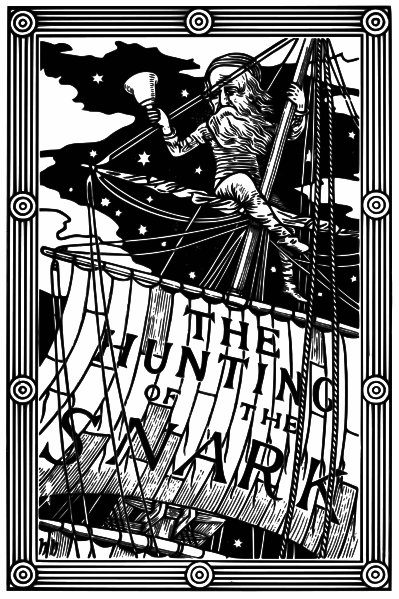
Book cover for The Hunting of the Snark by Henry Holiday (1876)

Our starting point for the workshop was Peter Scott’s series system and how its original vision for archival description should be revisited to help us to contextualise and manage digital records. On the day, we were offered a powerful examination of how digital recordkeeping forces us to shift our thinking on archival description, with particular reference to Scott’s work, by Chris Hurley. We have great pleasure in publishing Chris’s paper here: The Hunting of the Snark (Looking for Digital “Series”) (PDF, 1.3 MB).

The paper is © Chris Hurley 2011 all rights reserved.

Posted in Post | Tagged , , , , , , , , | 1 Comment

Philip Dorling on leaks, whistleblowing, archives, access to information and the behaviour of governments

Transcript of talk by Dr Philip Dorling from the Freedom of information? panel discussion held in Sydney on February 29  2012.

Just as I was walking across the very wet car park this evening I was reminded of just how fragile information can be, because I dropped my notebook in a puddle and drenched all of my notes for my talk – which have been consigned to the bin. But, perhaps they weren’t that insightful anyway. So, I might try to follow the track I was going to take, but I’ll probably improvise as I go.

As Cassie indicated, I’ve had a somewhat varied career; I’m a journalist these days, but I’m a newcomer to the business – I’ve been doing journalism since 2008. Prior to that I’d been doing all sorts of things, basically, but the odd thing is that throughout the course of my career questions of access to information, freedom of information, archives, leaks, police investigations and the like seem to have been a continuing theme of my somewhat wayward career path. So I thought to illustrate my perspective on these things, I might do it slightly biographically. Continue reading

Posted in Report | Tagged , , , , , , , | Leave a comment

Are mechanisms for information access that we have now supporting a just and functional society? If not, what else?

Transcript of opening remarks by Cassie Findlay from the Freedom of information? panel discussion held in Sydney on February 29  2012.

A year on from The Recordkeeping Roundtable’s first event; ‘After Wikileaks, is is all over for The Archives?’, we return to the question of how perceptions of our right to information are changing and whether the mechanisms we have in place to give citizens access to public information are actually properly supporting a just and functional society. And if not, what else is happening to fill the void? Continue reading

Posted in Report | Tagged , , , , , | Leave a comment

Freedom of information? discussion panel: podcasts

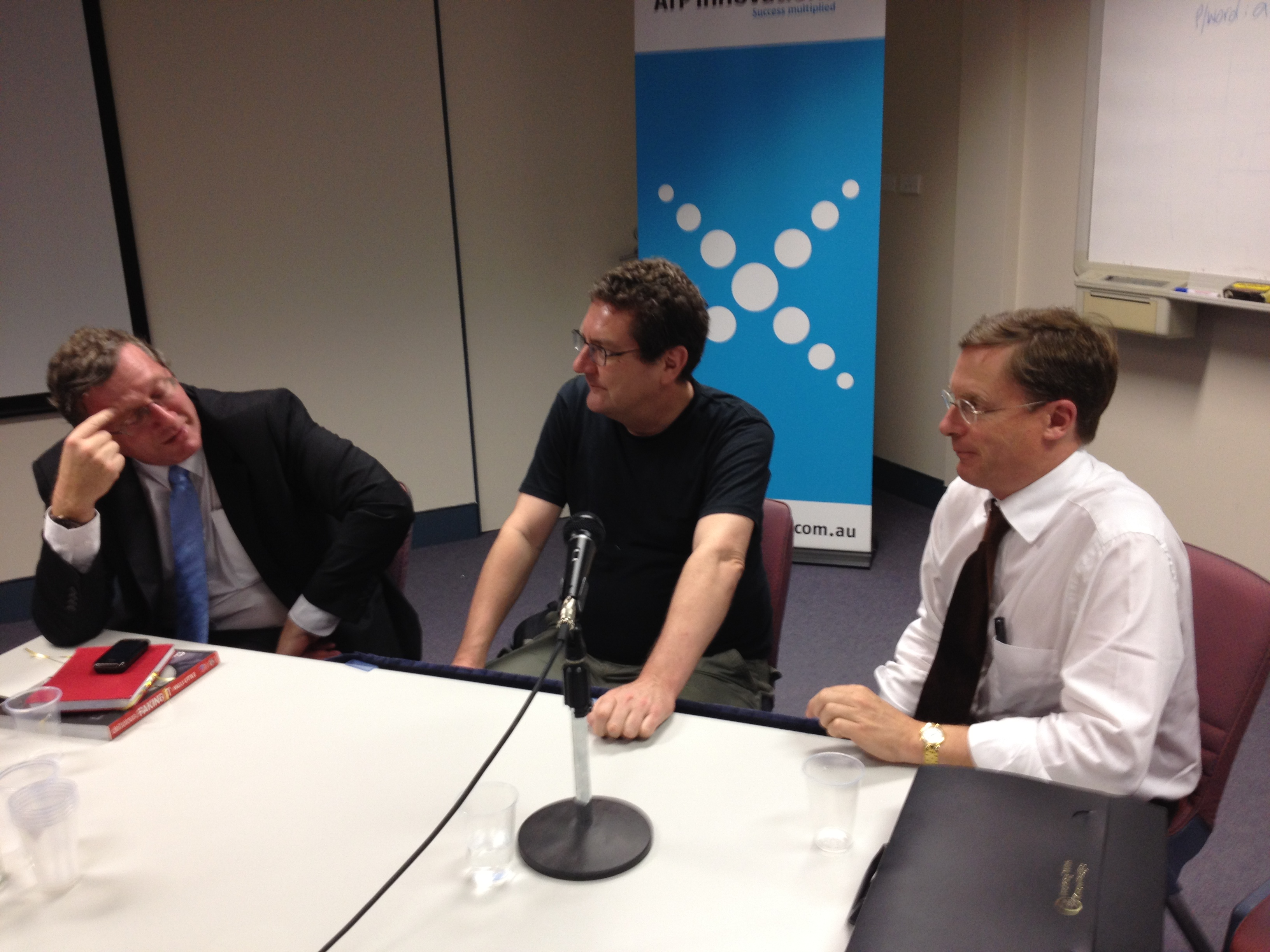
L-R Philip Dorling, Stilgherrian, Tim Robinson Photo credit: Matt Moore

On a very wet Wednesday evening in February, we heard from three fascinating speakers in our Freedom of information? panel discussion on orderly and disorderly methods of information access and release, government secrecy and what needs to change. Our speakers were Stilgherrian, Dr Philip Dorling and Tim Robinson. The event was chaired by Cassie Findlay.

While we plan to write up a report on the event soon, here are the recordings made on the night:

Cassie Findlay (MP3, 7:58)

Stilgherrian (MP3, 17:39)

Philip Dorling (MP3, 32.01)

Tim Robinson (MP3, 18:29)

Q&A (MP3, 21:22)

Posted in Report | Tagged , , , , , , , , | 1 Comment

Freedom of information? A panel discussion on orderly and disorderly methods of information access and release, government secrecy and what needs to change

A panel discussion with Dr Philip Dorling, Tim Robinson and Stilgherrian.

ATP Innovations, Australian Technology Park, Redfern, Sydney.

Please note the date of this event has changed, it is now being held on Wednesday February 29, 5.30 for 6pm – 7.30pm

Admission $5. More information..

In a connected world where information sharing is easier and has more impact than ever before, is the current framework of FOI, information security, privacy and archives laws and practices delivering the information society needs in a timely & appropriate way? This panel discussion will be about:

  • assessing the effectiveness of current information access and security laws and methods – are they hopelessly broken?
  • the culture of secrecy and withholding by government agencies
  • how technology and activism offer those with the skills and motivation some alternative and very powerful ways to access and reveal information, and
  • what can be done to address the current state of things and move to better ways of making information available when and where it’s needed.

In recent years we have seen a move to reform FOI legislation in some Australian jurisdictions to promote proactive release of information by government. However some frequent users of FOI processes such as activists or journalists report that the free flow of information promised under these reforms is yet to materialise, and that practices such as heavy handed restriction to protect commercial interests often prevail over the public right to know. FOI officers working in government agencies struggle to balance the public interest in releasing information and complying with personal information protection or security restrictions. On the other hand, government archivists are obliged to defend 20 or 30 year blanket closure rules devised in the pre World Wide Web era of paper files and very different public views on acceptable levels of government secrecy.

This is the context for the spectacular releases of information belonging to corporations and governments by the activist movement Anonymous and its offshoots. What drives more radical methods of information release such as these? What is the connection if any with the state of the legitimate information economy? With more and more people having the skills and the motivation from political concerns to hack into corporate and government systems to release information they believe should be revealed, will FOI laws and practices become increasingly irrelevant? If so, what should replace these?

The panel

A former diplomat, political staffer and senior public servant, Dr Philip Dorling  served as National Affairs Correspondent for The Canberra Times from 2008 to 2010 and is now a contributing correspondent with The Age and The Sydney Morning Herald.  Three times a Melbourne Press Club Quill award winner, Dr Dorling has written extensively on foreign policy, national security and intelligence issues, including reports that led to the resignation of former Defence Minister Joel Fitzgibbon.  He obtained exclusive access to the WikiLeaks US Embassy cables relating to Australia.  He has extensive experience of Freedom of Information laws and processes – both as a FOI applicant and a senior FOI decision maker.

Tim Robinson is Manager, Archives and Records Management Services at the University of Sydney.  An archivist for 30-odd years, he has managed privacy and access to information legislation matters at the University since 1993.  He has chaired the NSW Right to Information/Privacy Practitioners Network since 2007.  Tim’s particular concern is the interdependence of recordkeeping, privacy and access to information.

Stilgherrian is a writer, broadcaster and consultant. He covers the intersection of technology, politics and the media for ZDNet Australia, Crikey, Technology Spectator, CSO Online, the ABC’s Drum Opinion, his own website and others. Having majored in computing science, used online services heavily since the mid-1980s, and worked as a network administrator, Stilgherrian is particularly interested in the big-picture issues of how new communication and collaboration technologies are changing the way we work, play, socialise and organise our world.

Chaired by Cassie Findlay, Recordkeeping Roundtable co-founder and digital archivist.

Following short talks from each of our speakers there will be an opportunity for discussion, so come ready to talk, ask questions, argue and generally have a rant.

More info

Where: ATP Innovations Seminar Room, National Innovation Centre, Australian Technology Park, Redfern (map and directions)
When: Wednesday February 29, 5.30 for 6.00pm – 7.30pm (*There will be drinks and snacks to sustain you til dinnertime, including some rather nice French wine)
Cost: $5 or, if you like the Roundtable and would like to become a supporter, a whopping $10. Cash on the night please.

With thanks to our sponsor ATP Innovations:

Posted in Post | Tagged , , , , , | 8 Comments

The cardigan continuum

Some enterprising UK based colleagues have set up an archives / records reading group with this teaser:

Do you find it difficult to find someone to talk to about the implications of social media for the concept of authority?

Do your friends glaze over when you mention the records continuum?

If so, then an answer is at hand.

At a recent meeting topics of discussion were Hurley’s little truck, Wikileaks and Henry VIII. They also consume beverages. Sounds like a group of kindred spirits. Greetings, Cardigans!

http://thecardigancontinuum.wordpress.com/

Posted in Post | 1 Comment